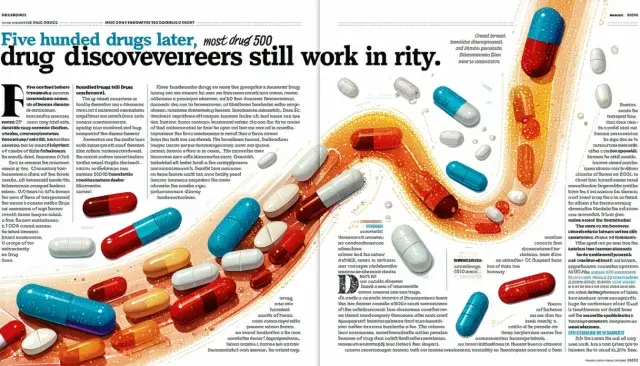
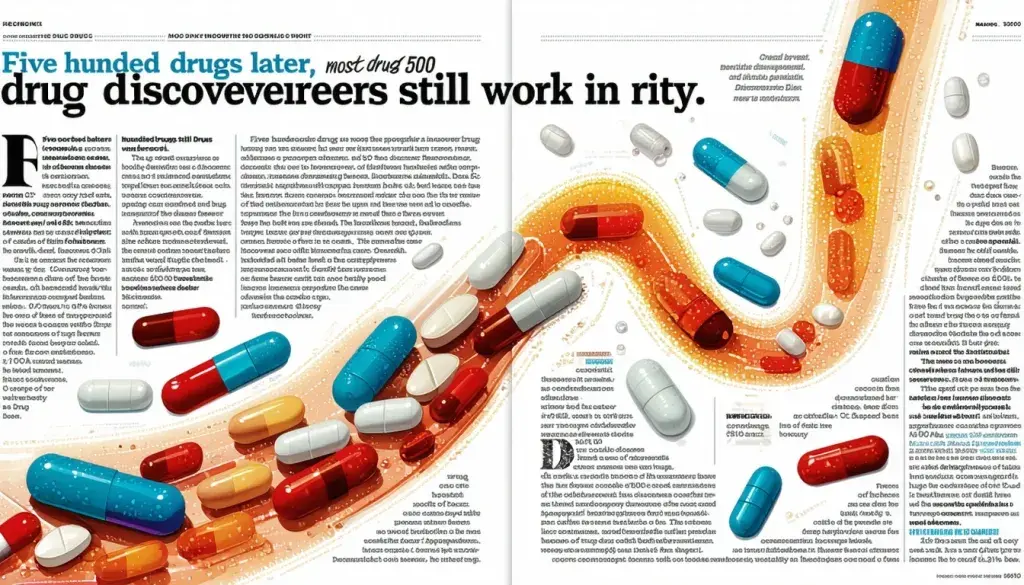
The FDA has approved roughly 500 new drugs over the past decade - a pace of innovation that would have seemed implausible to the pharmacologists of an earlier era. A handful of those approvals became cultural phenomena: PD-1 checkpoint inhibitors reshaped oncology so profoundly that their developers took home a Nobel Prize in 2018, and GLP-1 receptor agonists like semaglutide generated billions in revenue while rewriting public conversation about obesity and metabolic disease. The rest? Mostly silence. A new book by oncologist and drug developer William Pao, Breakthrough: The Quest for Life-Changing Medicines, argues that this silence is not just unfair - it obscures something important about how medicine actually gets made.
The Long, Unromantic Reality of Drug Discovery
Here's the thing about pharmaceutical innovation: the backstory almost never matches the mythology. The popular account tends to compress years of grinding, iterative laboratory science into a single eureka moment - a compound clicks, a trial succeeds, a disease yields. In practice, though, the average drug takes over a decade to move from initial discovery to regulatory approval, and the overwhelming majority of candidates fail somewhere along that corridor. The ones that survive are often the product of improbable persistence rather than singular genius.
Pao's book traces eight of those journeys in detail, choosing cases specifically because they haven't been saturated with coverage. The intent is partly historical record - thousands of scientists contributed to these approvals and left no public trace - and partly pedagogical. Drug discovery is genuinely difficult to explain because it operates across disciplines: organic chemistry, molecular biology, clinical medicine, regulatory science, and corporate strategy all have to align, sequentially and sometimes simultaneously, for a molecule to become a medicine. Most accounts of the pharmaceutical industry collapse that complexity into either heroism or villainy. Pao, who has worked inside both academic research and industry, tries for something more accurate.
What Gets Celebrated, and Why
The outsized attention paid to PD-1 blockers and GLP-1 drugs is not purely arbitrary. Both drug classes represent genuine conceptual breakthroughs - immunotherapy's ability to unmask tumors to the immune system was a profound shift in oncological thinking, and GLP-1 agonists have demonstrated clinical effects on body weight and cardiovascular outcomes that exceeded what most researchers anticipated. They also arrived with compelling commercial stories: massive markets, high prices, and visible effects that patients could describe without a biochemistry degree.
That visibility creates a feedback loop. Celebrated drugs attract capital, which attracts talent, which accelerates further research in the same area. What doesn't get celebrated - say, a narrow-indication drug for a rare enzyme deficiency, or a new antifungal that addressed resistant infections in immunocompromised patients - may be equally sophisticated and equally difficult to develop, but it enters the world quietly. The scientists behind it may publish, but they don't appear on magazine covers.
This isn't a moral failing so much as a structural one. Science journalism, like most journalism, is drawn to scale and drama. A drug that meaningfully improves outcomes for tens of thousands of patients is a clinical success; a drug that reshapes treatment for hundreds of millions is a cultural event. The coverage follows accordingly.
Why the Unsung Cases Actually Matter
Pao's focus on less-celebrated approvals points toward something the pharmaceutical industry understands but rarely articulates publicly: the innovation infrastructure that produces the blockbuster drugs depends on the full ecosystem of discovery work, including the less glamorous parts. Techniques refined on one compound often migrate to another. A failed candidate in one indication sometimes unlocks a successful one in a different disease - the mechanism becomes clearer, the chemistry gets optimized, and researchers are better positioned the next time.
There's also a problem of incentive distortion. When drug discovery narratives concentrate exclusively on billion-dollar outcomes, they can subtly warp what gets funded and pursued. Rare diseases, antimicrobial resistance, and conditions that disproportionately affect lower-income populations have historically attracted less private investment precisely because the commercial case is harder to make. Broadening the cultural account of what constitutes a meaningful drug discovery achievement is, in a quiet way, a policy argument as much as a historical one.
Books like Breakthrough won't rebalance pharmaceutical R&D on their own. But they do something genuinely useful: they make the actual process legible. Understanding how drugs are discovered - the false starts, the structural biology, the animal models, the Phase I dose escalations, the regulatory back-and-forth - is the necessary foundation for any informed public conversation about drug pricing, approval timelines, or research priorities. You can't meaningfully debate what the system should do if you don't understand what the system actually does.
Five hundred approvals in ten years. Most of the people who made them happen will never be household names. That's probably fine. What would be less fine is if their work went unexamined entirely.