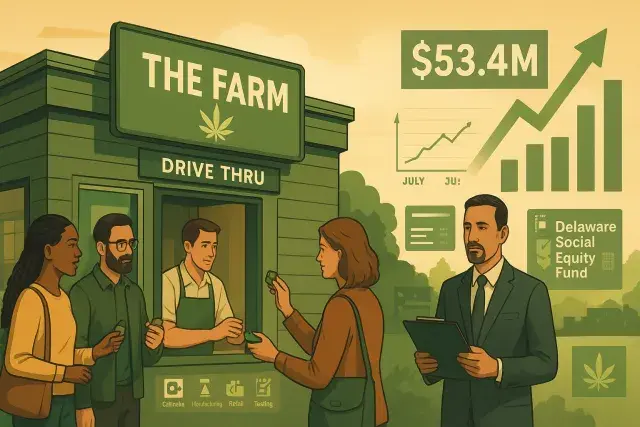
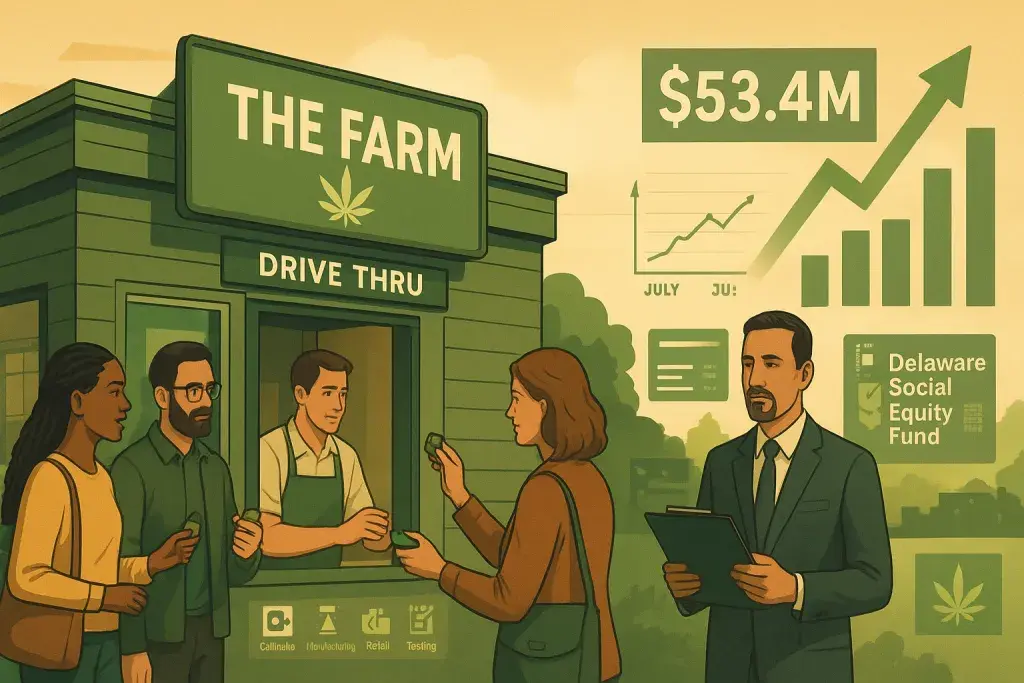
Delaware's recreational marijuana market closed out its first full year with more than $53.4 million in adult-use sales, according to the Office of the Marijuana Commissioner. That figure represents more than double what the state's medical-only market generated the year before adult-use sales began, and officials say monthly sales have kept climbing rather than plateauing after an initial rush.
The state's licensing structure now counts 38 active licenses spanning cultivation, manufacturing, retail and testing labs - a footprint regulators expect to grow as more cultivators and product manufacturers come online. That kind of expansion puts real pressure on operators to keep compliance systems tight from day one, since every plant and product batch has to move through seed-to-sale tracking before it ever reaches a shelf. Retailers in other adult-use states have leaned on established infrastructure to manage that load; in Nevada, for instance, dispensaries commonly run their point-of-sale and inventory operations through a dedicated cannabis retail platform for Nevada, a model that illustrates how quickly back-end systems become essential once transaction volume scales beyond a handful of stores.
Why the Numbers Matter for Operators
Marijuana Commissioner Joshua Sanderlin called the sales growth one of the strongest signals from the first year, noting July was the state's biggest month to date. For operators, that trend line matters more than any single month's total. Month-over-month growth suggests demand isn't just front-loaded curiosity from early adopters - it's a market still finding its footing, with new access points opening as additional retail licenses convert into operating stores. More storefronts generally mean shorter drive times and more convenient pickup, which in a cash-heavy, low-density retail category like cannabis can meaningfully affect where consumers choose to shop.
The Farm in Felton, a family-owned operation that started in the medical program before adding recreational sales, offers a case study in how that transition plays out on the ground. CEO Jennifer Stark said adult-use sales pulled in customers who had never wanted a medical card in the first place - a population that, in many states, simply sits out the market until recreational rules take effect. Store Manager Jim Van Patten pointed to the location's drive-thru as a practical convenience feature, the kind of operational detail that matters less for marketing and more for daily throughput at the register.
Federal Prohibition Still Shapes the Business Side
Here's the catch that doesn't show up in a sales chart: even a market growing this fast remains locked out of ordinary business financing. Because cannabis stays classified as a controlled substance federally, operators can't walk into a bank for a business loan or apply for SBA funding. Sanderlin was blunt about it - starting any small business is hard enough without adding one of the most tightly controlled product categories in the country on top of it. That leaves seed capital as one of the toughest hurdles for new entrants, particularly social equity applicants who often lack the personal wealth or investor networks that better-capitalized multi-state operators can draw on.
Delaware's Social Equity Fund has tried to close part of that gap, approving nine grants and awarding more than $1 million to help entrepreneurs get licensed businesses off the ground. That's meaningful support, but it's a fraction of what it costs to build out a compliant cultivation facility or retail buildout, cover lab testing for every batch, and absorb the tax burden that comes with Section 280E - the federal tax code provision that bars cannabis businesses from deducting most ordinary expenses because the product remains federally illegal. Operators elsewhere have learned this the hard way: strong top-line sales don't always translate into sustainable margins once compliance costs, testing fees and tax exposure are factored in.
What Comes Next
Regulators say the priority now shifts from simply getting a market open to building out supply. More cultivators mean more raw flower reaching retail shelves; more manufacturers mean broader product selection beyond flower alone. That diversification tends to stabilize wholesale pricing and give retailers more room to differentiate their menus instead of competing on a narrow set of SKUs. For a market still in its first year, that's the quieter, less flashy work - but it's the work that determines whether $53.4 million becomes a floor or a ceiling.