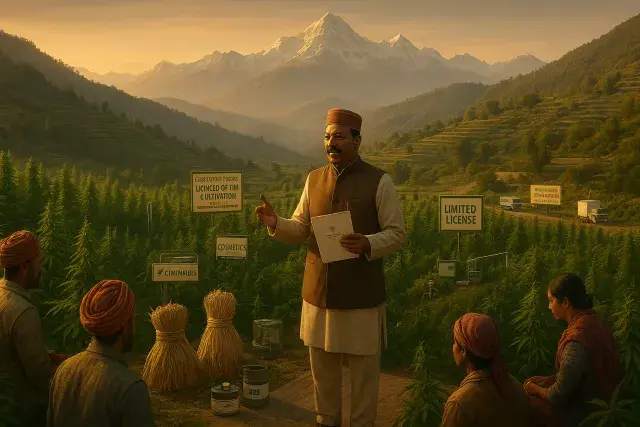
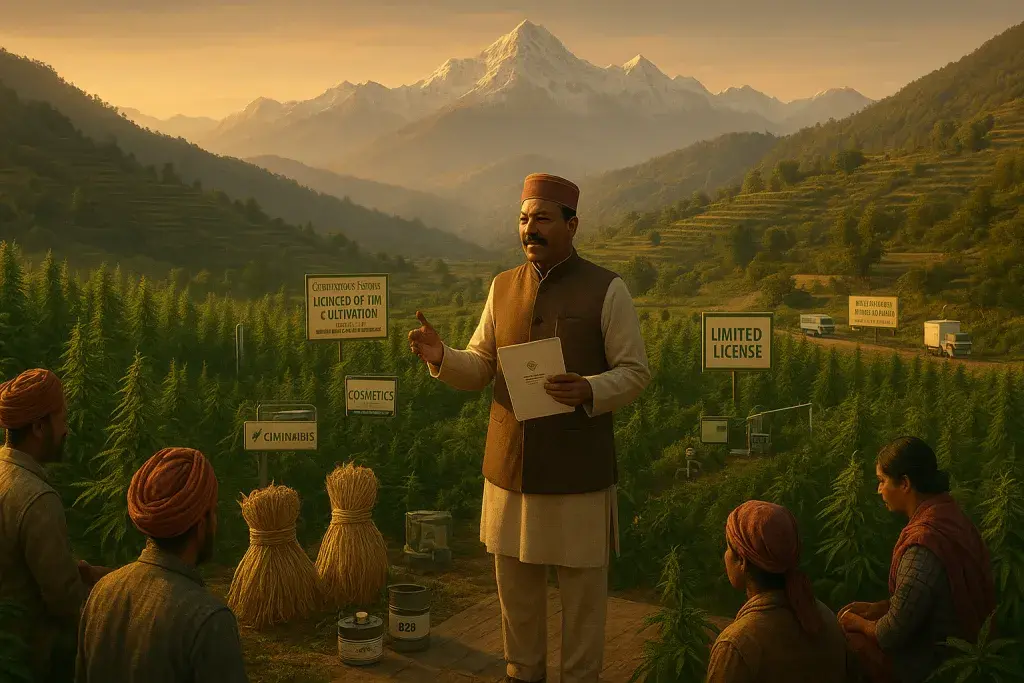
Himachal Pradesh has moved to legalize regulated cannabis cultivation, with the state cabinet approving a framework that covers both industrial hemp and medicinal cannabis. State minister Jagat Singh Negi announced the decision on June 20, describing it as the product of an extended legislative review that included field studies across multiple regions. The policy is designed to generate new income for farmers, reduce fallow land, and supply material to the textile, cosmetics, and pharmaceutical sectors.
The structure of the program draws a deliberate line between industrial hemp - destined for fiber, clothing, and cosmetic goods - and medicinal cultivation, which will operate under tighter controls with a strictly limited number of licenses issued at launch. Negi compared the medicinal side of the framework to licensed opium cultivation already operating in Rajasthan and Madhya Pradesh, where pharmaceutical offtake agreements and government oversight govern the entire supply chain. That reference point matters: those programs represent the closest analog India has to a regulated cannabis licensing model, and they show that alcohol-style compliance architecture - track from seed to delivery, restrict license counts, mandate end-use verification - is feasible in the Indian agricultural context. Operators and investors in mature regulated markets like the United States, where tools such as cannabis pos systems alaska demonstrate how point-of-sale infrastructure integrates with compliance reporting, will recognize the underlying logic: licensing caps and restricted distribution are standard early-stage regulatory tools, not obstacles to eventual market growth.
On the agricultural side, the state's pitch to farmers rests on a few concrete claims. Cannabis, officials say, requires less water and fewer chemical inputs than many traditional crops - a meaningful argument in a mountainous state where irrigation infrastructure is constrained and input costs eat into margins. Negi also pointed to fallow land as an underutilized resource, noting that some agricultural areas could support two harvests annually under a cannabis rotation. That is a supply chain argument as much as a farming one: consistent raw material supply is what makes downstream industrial processing economically viable, and irregular cultivation schedules are a chronic problem in early hemp programs worldwide.
Regulatory Architecture and Early-Stage Risk
What's striking here is how deliberately cautious the announced framework is. A limited initial license count, a comparator model drawn from opium cultivation, and a stated emphasis on industrial applications before medicinal ones - these are not accidental design choices. They reflect the standard approach regulators take when introducing a politically sensitive crop: narrow the scope, restrict supply, establish compliance precedent, then expand. Negi addressed public concern about drug misuse directly, citing the legislative committee's finding that industrial cannabis cultivation does not produce intoxicating-level content in the plant material destined for fiber and textile use. That is accurate at a general level - hemp varieties bred for fiber have low concentrations of psychoactive compounds - but it is also the argument regulators in every legal market have had to make, repeatedly, before the licensed industry gains stable footing.
The medicinal component carries more regulatory weight. Negi noted that cannabis-based formulations are being used in the treatment of cancer and several other diseases, which tracks with the global direction of pharmaceutical cannabis research. But medicinal programs demand more infrastructure than industrial hemp: verified THC and CBD content, third-party testing, documented chain of custody, and pharmaceutical-grade manufacturing standards at the processing end. Building that apparatus from scratch, while simultaneously standing up a licensing bureau and training compliance inspectors, is the hard operational problem the state will face in the near term.
What This Means for the Broader Cannabis Industry
India is not a cannabis retail market - not yet, and not under this framework. This is a B2B and agricultural policy story, not a consumer dispensary story. But the Himachal Pradesh approval is worth tracking for international operators, investors, and supply chain businesses for a few reasons. First, India's agricultural base and manufacturing capacity make it a potential low-cost raw material source for hemp fiber and cosmetic ingredient supply chains that currently rely on North American or European growers. Second, the regulatory model being constructed here - licensed cultivation, end-use restrictions, pharmaceutical offtake as the medicinal pathway - is consistent with the frameworks that eventually gave rise to more developed regulated industries elsewhere. Third, and most practically: the state's acknowledgment that the legal cannabis industry remains in its early stages is honest. Early-stage programs carry early-stage risk - regulatory reversals, licensing delays, inadequate testing infrastructure, and uncertain demand from downstream processors are all real possibilities.
The textile and cosmetics angle deserves attention too. Hemp fiber and hemp-derived cosmetic ingredients occupy a different regulatory category than medicinal or adult-use cannabis in most jurisdictions, and they already move through established industrial supply chains globally. A state-level Indian program focused on those categories first is a more conservative and commercially realistic entry point than launching a pharmaceutical program cold. Whether Himachal Pradesh can build the processing infrastructure to match cultivation ambitions - and whether it can do so on a timeline that keeps farmers from abandoning the crop before returns materialize - is the question the next phase of policy development will have to answer.