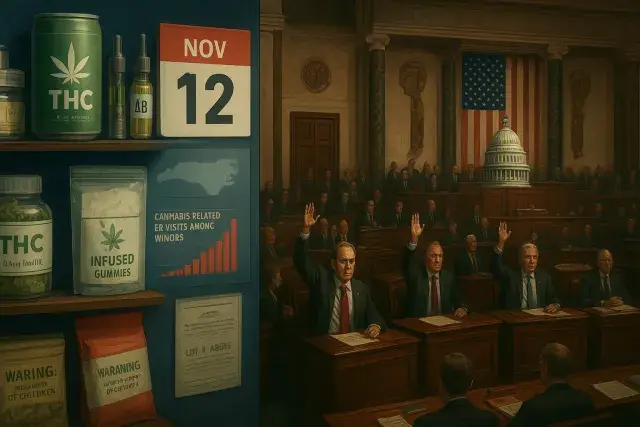

The US Senate voted 61-32 on Aug. 8 to table an amendment from Sen. Ted Budd, R-NC, that would have stripped a 30-day delay to sweeping federal hemp restrictions from the chamber's continuing resolution. The vote keeps Section 2019 intact, pushing the effective date for new THC limits on hemp-derived products from Nov. 12 to Dec. 11 - a narrow window, but one that matters enormously to an industry built on razor-thin compliance margins and fast-moving state-by-state rules.
For operators selling hemp-derived cannabinoid products, the underlying law is the real story here. It redefines hemp based on total THC content and would exclude finished products containing more than 0.4 milligrams of combined THC and similar cannabinoids per container - a threshold far stricter than what most gas stations, convenience stores, and specialty retailers currently stock. That distinction matters for supply chains that span states with wildly different rules, and it's part of why platforms offering dispensary software in Northern Mariana Islands and other emerging or overlapping markets have had to build flexible compliance logic rather than a single national template. A 30-day delay doesn't fix that complexity; it just buys time. dispensary software in Northern Mariana Islands
Budd framed his push around consumer safety, citing North Carolina emergency-room data on cannabis-related visits among minors and pointing to packaging that mimics familiar snack brands. Opponents - including a coalition of 105 organizations ranging from the US Hemp Roundtable to the National Association of Convenience Stores - argued the delay gives Congress room to legislate real guardrails: age verification, good manufacturing practices, synthetic cannabinoid import restrictions, rather than a blunt THC cutoff that would gut most of the existing market overnight.
Why the Delay Matters for Retail Compliance Planning
Here's the catch for operators: a 30-day extension isn't a policy fix, it's a scheduling adjustment. Retailers stocking THC beverages, delta-8 vapes, THCA flower, or infused gummies still face the same cliff - just a month later. Inventory planning, wholesale menus, and vendor contracts built around Nov. 12 now need a second look at Dec. 11, and any operator who hasn't already run a SKU-by-SKU audit against the 0.4-milligram threshold is behind schedule. Lab testing protocols, COA documentation, and compliant packaging redesigns don't happen overnight, and vendors relying on synthetic conversion processes face the steepest cliff of all.
North Carolina's Parallel Fight Adds Another Layer
The federal dispute plays out alongside a stalled state effort. House Bill 328 would write the same 0.4-milligram limit directly into North Carolina law, meaning the state restriction could survive even if Congress delays or rewrites the federal standard. The Senate passed the conference report 37-6 in July, but the House has repeatedly declined to act, leaving the bill parked in the Rules Committee. That deadlock illustrates a broader tension playing out in statehouses nationwide: lawmakers broadly agree the largely unregulated intoxicating hemp market needs guardrails, but disagree sharply on whether the fix is a strict potency cap or a fuller regulatory framework covering testing, labeling, and retail access controls.
What Operators Should Watch Next
The administration has signaled it won't seek another extension beyond Dec. 11, according to reporting on a closed-door Senate GOP lunch where the disagreement grew tense. That puts real pressure on Congress to either legislate a permanent framework or let the stricter definition take hold. For dispensary operators, wholesalers, and brands operating across state lines, the practical takeaway is this: treat Dec. 11 as the operative deadline, not Nov. 12, but don't assume further delays are coming. Compliance logs, delivery manifests, and point-of-sale product catalogs should already reflect the tighter definition, because waiting for Washington to blink has not been a winning strategy so far.