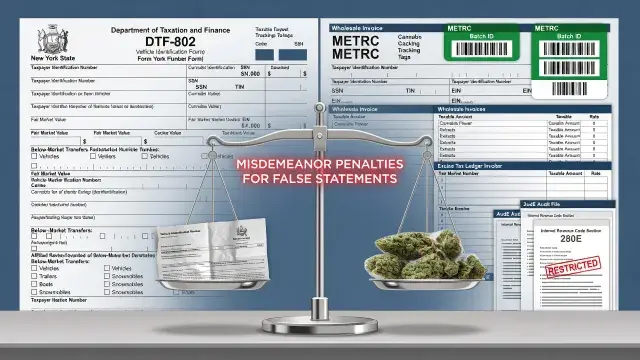
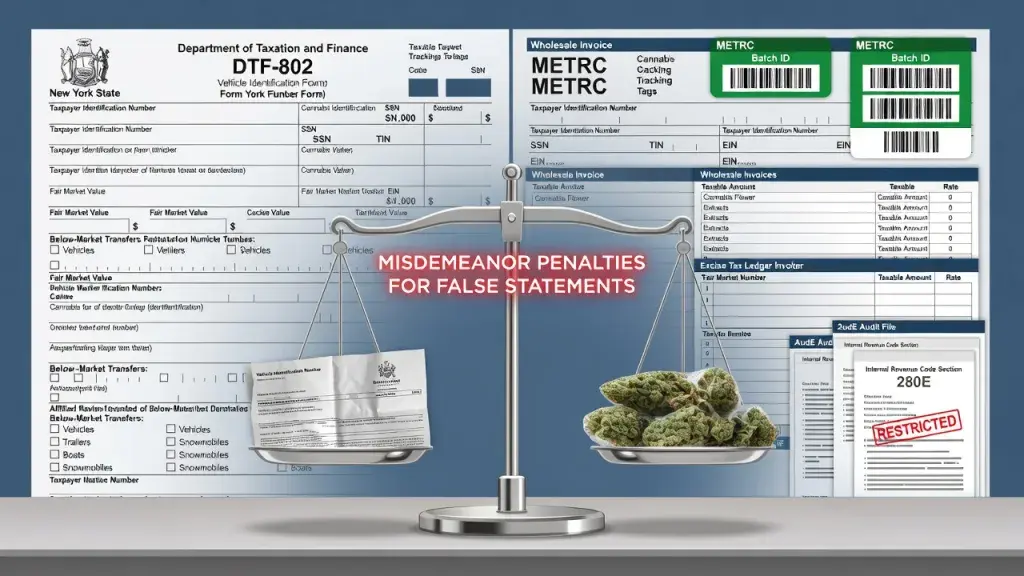
New York's Form DTF-802 is a tax-collection document for vehicles, trailers, boats, and snowmobiles. On its face it has nothing to do with cannabis retail. But the mechanics behind it - taxpayer identification requirements, fair market value scrutiny, affidavits for below-market transfers - map directly onto the compliance logic that licensed cannabis operators live with every day. Operators who understand why a tax agency demands an SSN, TIN, or EIN before processing a transfer will recognize the same instinct driving METRC reporting, wholesale invoicing, and 280E audit exposure in their own business.
Why Identification Requirements Exist in the First Place
A taxpayer identification number is not paperwork for its own sake. It's the thread a tax authority uses to tie a transaction to a specific legal person or entity, so that tax liability can be assessed, collected, and audited later. In the vehicle context, that means no registration moves forward without a valid SSN, TIN, or EIN attached to the new owner. In cannabis retail, the same principle governs everything from seed-to-sale tracking to wholesale manifests: every transfer needs a verifiable party on each end, or the chain of custody breaks down and regulators notice.
Here's the catch for cannabis businesses specifically - because of federal scheduling, dispensaries and cultivators can't claim standard business deductions under Internal Revenue Code Section 280E, which makes accurate taxpayer identification and recordkeeping even more consequential. A sloppy EIN mismatch on a tax form is an inconvenience for a car buyer. For a licensed operator, the same kind of identification gap can trigger a compliance log review or an audit that touches excise tax, sales tax, and federal filings all at once.
Fair Market Value Scrutiny Isn't Unique to Vehicles
The DTF-802 form requires sellers to account for transactions priced below fair market value, with an affidavit process for gifts or discounted sales outside immediate family. That sounds tidy on paper, but the underlying concern - undervaluing a transaction to reduce tax owed - shows up constantly in regulated cannabis supply chains. Wholesale pricing between affiliated entities, transfer pricing in vertically integrated operations, and discounted product moved between sister licenses all invite the same question a tax examiner asks about a car sold for a dollar to a friend: is this the real value, or a number chosen to avoid tax?
State cannabis tax regimes, many of which assess excise tax on wholesale transfer price, build in similar guardrails. Operators who structure intercompany transfers below market rate without documentation expose themselves to reassessment, back taxes, and in some jurisdictions, penalties tied to intent - not unlike the misdemeanor exposure described in the vehicle form's certification language for willfully false statements.
What This Means for Operators and Compliance Teams
The lesson isn't about vehicles at all. It's about documentation discipline as a business survival skill in any heavily taxed, heavily licensed industry.
- Maintain accurate taxpayer identification records for every business entity involved in a transaction, including affiliated or related-party transfers.
- Document the basis for any below-market pricing between related parties, with contemporaneous records rather than after-the-fact justification.
- Treat certification language - the kind that warns of misdemeanor exposure for false statements - as a signal of how seriously a regulator views the underlying form, not boilerplate to skim past.
- Build compliance workflows that assume audits will happen, because in both vehicle taxation and cannabis excise tax, the burden of proof sits with the taxpayer.
To put it plainly: a dispensary's point-of-sale system and a state's vehicle tax bureau are solving the same underlying problem - proving who owns what, at what price, and whether tax was properly assessed. Operators who treat identification and valuation documentation as a minor administrative step are the ones most likely to find themselves explaining a discrepancy to an auditor later.