A federal judge spent nearly five hours Wednesday weighing whether to freeze Virginia's new hemp restrictions before they take effect Saturday, as store owners testified that the rules could wipe out inventory and force closures within days. U.S. District Judge Robert S. Ballou heard from seven hemp businesses that sued to block enforcement of House Bill 30, which eliminates the state's 25-to-1 CBD-to-THC exception and caps most hemp products at two milligrams of total THC per package. No ruling came Wednesday, but attorney Chap Petersen, who represents the plaintiffs, said he expects a decision by Friday - a tight window given that the new limits are scheduled to take effect Aug. 15.
The case lands at a moment when hemp retailers across several states are being pulled into tighter regulatory frameworks that increasingly resemble adult-use marijuana compliance regimes - think batch testing, COA documentation, and SKU-level tracking of total THC content rather than just CBD concentration. That shift changes more than shelf labeling; it touches point-of-sale configuration, tax reporting, and how a store reconciles what's legally sellable against what's already been ordered, invoiced, and stocked. Retailers operating across state lines feel this acutely, since compliance infrastructure built for one jurisdiction rarely transfers cleanly to another. Multi-state operators managing separate systems already understand this problem well; some Ohio operators, for instance, rely on a dedicated point-of-sale for Ohio dispensaries built around that state's specific THC and labeling thresholds, which underscores how quickly software and inventory rules diverge from one statehouse to the next. point-of-sale for Ohio dispensaries
Why the Timing Argument Matters
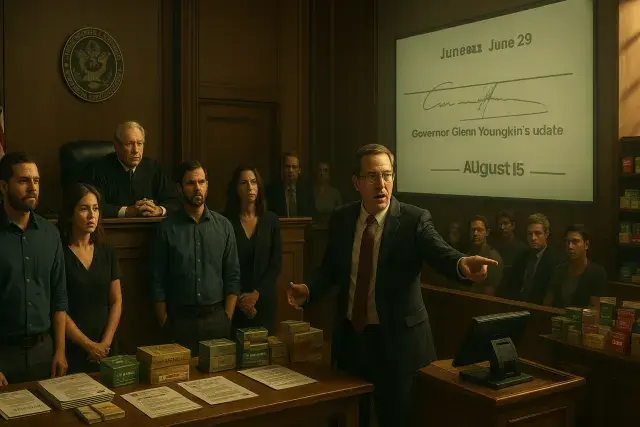
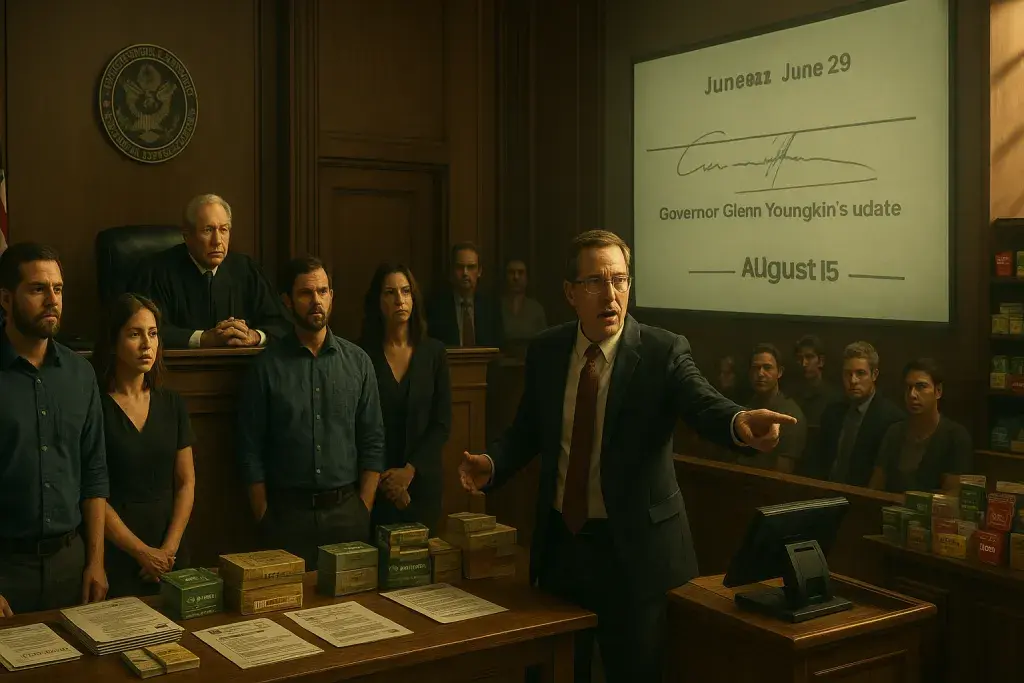
Petersen's central argument isn't really about whether Virginia can regulate hemp - it's about sequencing. Governor Glenn Youngkin didn't sign the budget bill until June 29, leaving businesses roughly six weeks to prepare for a compliance overhaul that touches sourcing, manufacturing, and retail inventory simultaneously. For an agricultural product, that's an unusually short runway. Hemp crops planted in April are harvested around October; once cultivated and processed into finished goods, they can't simply be reformulated or shipped to a friendlier state. That's a meaningful distinction from other regulated products where a business might relocate equipment or pause production without destroying the underlying asset.
The Overnight Compliance Problem
What's striking here is the cliff-edge nature of the transition. Products legal to sell at midnight on Aug. 14 could become unlawful hemp - and by Virginia's definition, potentially unlawful cannabis - hours later, with no clear guidance on disposal, returns, or liability exposure in between. Store owners like Cody Moorefield of Simply Hemp described facing that exact scenario: shelves stocked with compliant inventory one night, and no clear answer the next morning about what to do with it. That kind of regulatory whiplash creates real exposure for owners who could theoretically face criminal liability for products they lawfully purchased and displayed under the prior framework.
What an Injunction Would and Wouldn't Do
Petersen was careful to frame the request narrowly. The lawsuit isn't asking the court to strike down the law outright - at least not yet. A temporary injunction would simply pause enforcement, giving businesses room to sell existing inventory and, ideally, lobby the General Assembly for a fix before a full constitutional trial, which Petersen said could come as early as next year if lawmakers don't act. That trial would test claims including an alleged unconstitutional taking, since the businesses argue the law strips value from operations built in good faith under the previous regulatory structure. If the state loses that fight later, the financial exposure could extend well beyond compliance costs.
- New rule: two milligrams of total THC per package for most hemp products, removing the prior 25-to-1 CBD-to-THC exemption
- Effective date: Aug. 15, unless the court intervenes
- Legal posture: plaintiffs seek a temporary injunction now, with a possible constitutional trial in early 2026
- Business risk cited: existing inventory becoming unsellable overnight, with unclear disposal or liability guidance
For dispensary-adjacent hemp retailers, wholesalers, and the Virginia manufacturers whose products fill their shelves, the case is a reminder that compliance timelines set in a budget bill can move faster than a retail supply chain can absorb. Whatever Ballou decides, the underlying tension - regulators tightening THC thresholds ahead of a state's transition to regulated adult-use marijuana, while existing hemp operators scramble to keep pace - is likely to resurface in other states weighing similar restrictions.