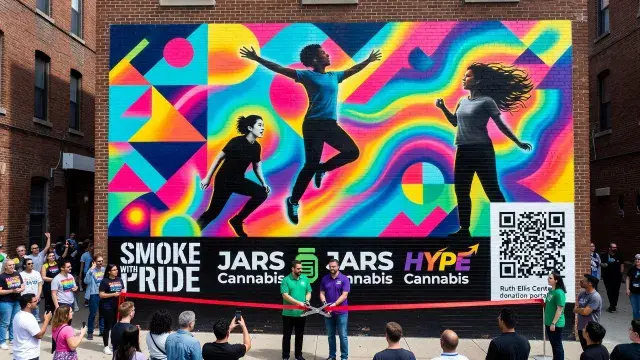
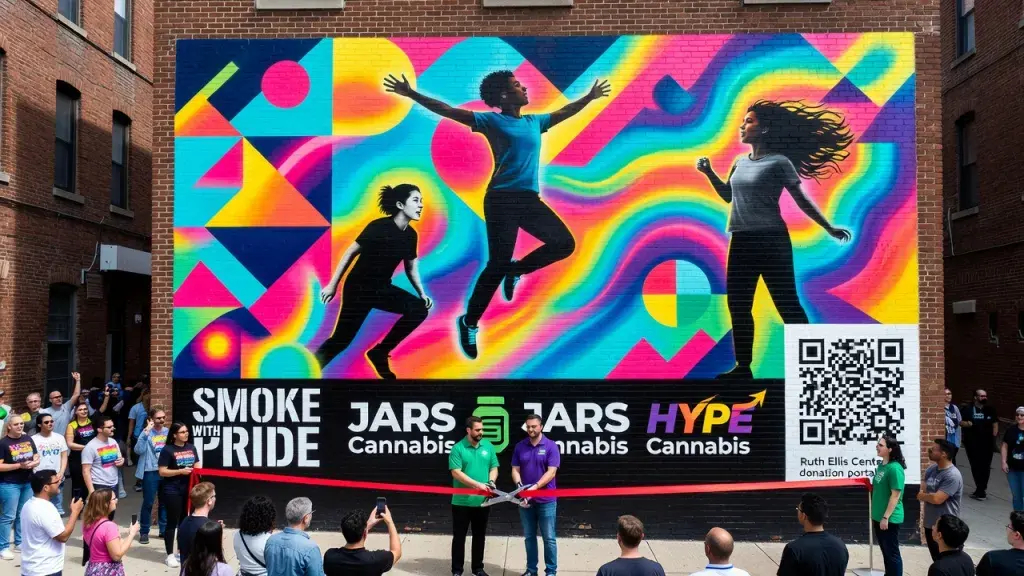
Two Michigan cannabis retailers put their marketing budget toward something other than a discount promotion this month. JARS Cannabis and HYPE Cannabis held a ribbon-cutting in downtown Ferndale to unveil "Polychromatic Super You," a 40-by-25-foot mural by artist Joey Salamon installed in the alley at 258 W. Nine Mile Rd. The piece anchors the companies' joint Smoke with Pride campaign, which channels a share of product proceeds to Detroit's Ruth Ellis Center, a support organization for at-risk LGBTQ+ youth.
The mechanics of the campaign matter as much as the mural itself, at least from a retail operations standpoint. Ten percent of proceeds from HYPE products sold at JARS locations, and 100 percent of proceeds from a dedicated JARS x HYPE Smoke with Pride Kit, go to the Ruth Ellis Center. That kind of structured, SKU-level giving requires clean point-of-sale reporting and consistent categorization at the register - not a small task when budroom inventory turns over constantly and staff are also managing compliant packaging, age verification, and daily compliance logs. Retailers pursuing cause-marketing tie-ins like this one need the same back-end discipline multi-state operators apply to wholesale allocation or, in adjacent markets, the kind of tracking supported by cannabis distribution software missouri operators rely on to keep donation math auditable and separate from standard sales tax reporting. cannabis distribution software missouri
A QR code affixed to the mural links visitors to campaign information and a direct donation portal for the Ruth Ellis Center, a detail that reflects a broader trend in cannabis retail marketing: pairing physical storefronts and public-facing brand moments with digital calls to action that regulators generally view as promotional speech rather than product advertising, which keeps the campaign further from the stricter rules that govern cannabis marketing aimed at consumption.
Why Cannabis Brands Are Investing in Community Visibility
Cannabis operators have limited advertising channels compared with most consumer product categories. Federal illegality blocks access to many mainstream ad platforms, and state rules on cannabis marketing tend to restrict imagery, placement, and audience targeting. Public art and cause partnerships sidestep those constraints while still building brand recognition in a local market. For JARS and HYPE, a mural tied to a nonprofit beneficiary functions as community relations, local goodwill, and brand differentiation all at once - without tripping the same regulatory wires as a discount coupon or a billboard near a school.
What Operators Should Take From This
The Smoke with Pride model offers a template other dispensaries and brands might study, but it is not without operational lift. Structured charitable giving tied to specific SKUs demands accurate inventory tagging, transparent accounting separate from 280E-constrained business expenses, and a public-facing reporting mechanism that holds up if a nonprofit partner or a journalist asks for numbers. Retailers considering something similar should treat it as a compliance and finance exercise first, marketing second.
- Cause-linked promotions require clean SKU tracking to verify donation totals
- Charitable proceeds must be accounted for separately from standard retail revenue under 280E constraints
- Public art and QR-based donation links avoid many restrictions placed on direct cannabis product advertising
- Local zoning and municipal approval typically govern outdoor murals on commercial property, independent of cannabis licensing rules
None of this changes the underlying reality that cannabis remains an age-restricted, regulated product. The mural itself makes no product claims and depicts no consumption; it functions as a community landmark tied to a fundraising campaign, which is precisely the kind of separation between brand visibility and product promotion that keeps this sort of initiative on solid regulatory footing.