Rhode Island's retail cannabis licensing process is back on the clock. After a federal court challenge to residency requirements blew up the entire 2024 application cycle in April, the General Assembly rewrote the offending language, and the Cannabis Control Commission has reopened both social equity certifications and general retail applications. Social equity certifications are due September 11; retail applications close November 23. Everyone who applied under the old rules is starting over.
That's a significant operational reset for applicants who had already sunk money into real estate holds and zoning work under the prior framework. The residency requirement - mandating that at least one applicant live in Rhode Island - had already been struck down in other jurisdictions before Rhode Island's own version met the same fate, a pattern Judge Melissa DuBose pointedly called self-inflicted when she described the fallout from the Commission's decision to press ahead despite the warning signs. Operators rebuilding their applications now need every other piece of their business plan in order, and that includes the back-office systems regulators will expect to see functioning from day one - a licensed retailer in a neighboring adult-use market, for instance, would already be running compliant cannabis POS in Illinois to satisfy seed-to-sale tracking and point-of-sale reporting obligations, and Rhode Island applicants should expect similarly close scrutiny of their inventory and tax-reporting infrastructure once licenses are awarded. compliant cannabis POS in Illinois
What Changed, and What Didn't
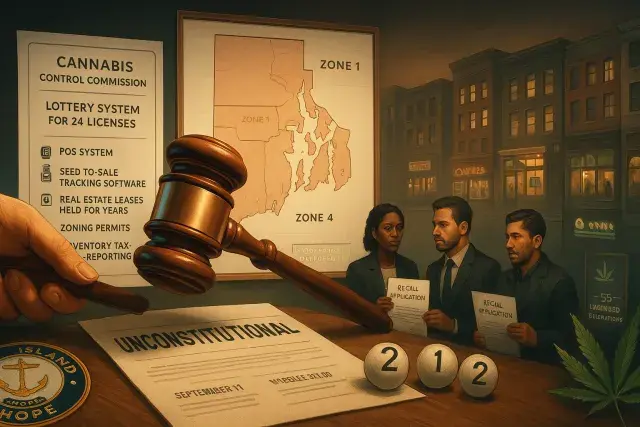
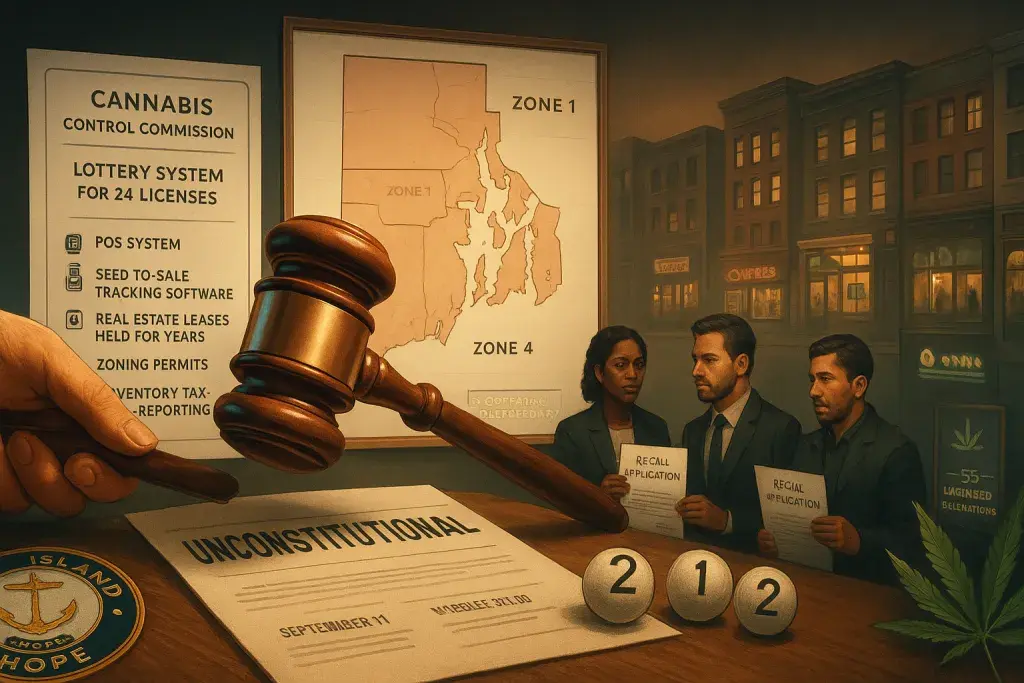
The legislature didn't just strip out the residency clause. It also trimmed several implicit residency requirements buried in the social equity application criteria, language that had functioned as a backdoor version of the same constitutional problem. The lottery system remains intact: 24 licenses across six zones, awarded to applicants who clear baseline requirements including secured real estate and proper zoning. The math has shifted, though. The canceled lottery would have awarded only 20 licenses because Zone 1, covering the northern part of the state, and Zone 4, covering East Greenwich, North Kingstown, Cranston and Warwick, didn't draw enough qualified applicants the first time around. Whether that changes with a fresh applicant pool is an open question.
A Second Bite Isn't Necessarily a Fair One
Here's the catch that's got existing applicants frustrated: the reopened process lets brand-new groups apply without having carried the same financial burden. Applicants who held leases for years on speculative real estate, betting on winning the lottery, are now competing against newcomers with no sunk costs and a clean look at exactly which zones are underserved. That's not a small distinction in a market where holding commercial real estate for a dispensary that may never open is its own kind of slow bleed. Fair or not, it's the framework the General Assembly chose, and it does at least remove a constitutional defect that courts weren't going to tolerate indefinitely.
Pressure Building on Both Ends of the Supply Chain
The delicensing drama isn't happening in a vacuum. Before April's derailment, the Commission was already weighing whether to slow retail expansion further, worried that flooding the market with new storefronts would trigger price compression among the state's nine existing dispensaries. Meanwhile, cultivators are squeezed from the other direction. Rhode Island now has 55 licensed cultivators, down from 58 earlier this year, following OP Pharm's merger into the vertically integrated New Leaf Compassion Center and Blackstone Valley Group's decision not to renew its license. Six of the nine operating dispensaries are already partially or fully vertically integrated, meaning they grow a chunk of what they sell, which shrinks the wholesale market available to independent cultivators even further. More retail licenses would, in theory, give those growers more buyers. Whether the state's regulators move fast enough to matter is the real question hanging over this second attempt.