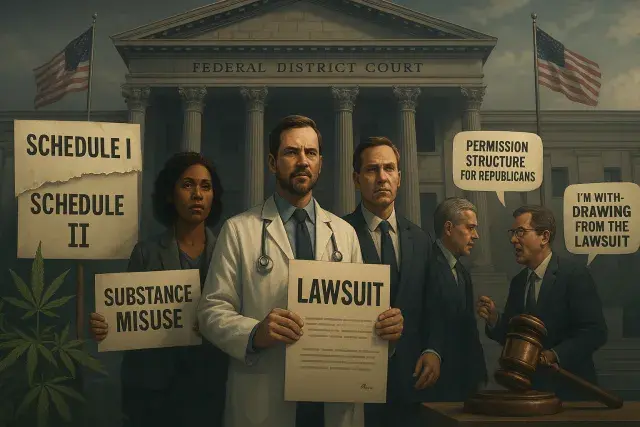
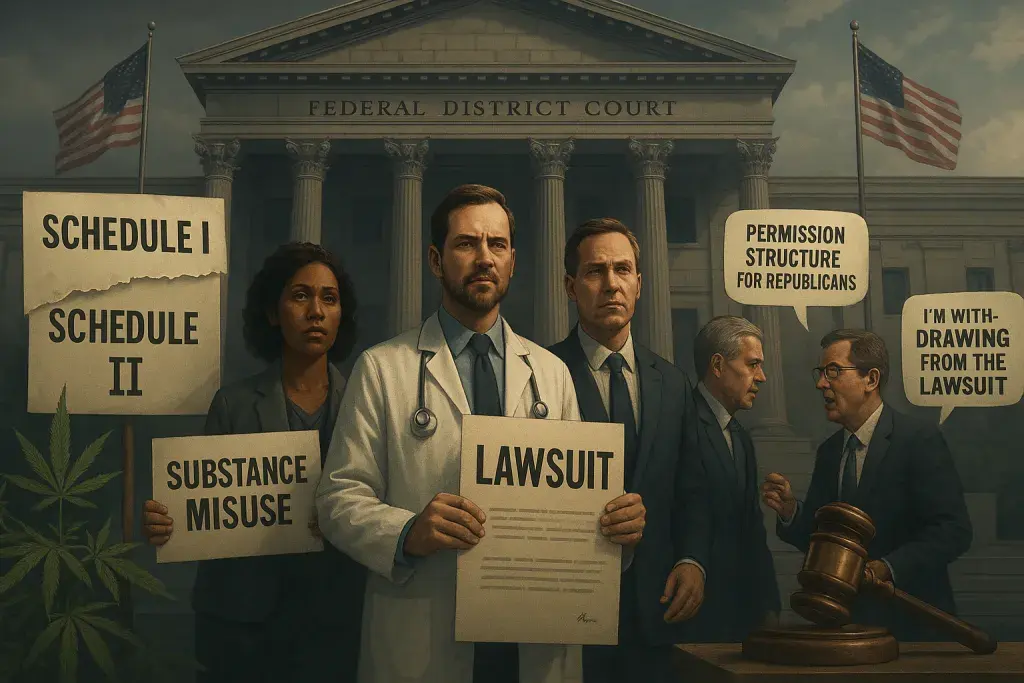
A fresh legal challenge is targeting the Trump administration's move to reschedule marijuana under federal law - this time brought by a coalition that includes prohibitionist advocates, substance misuse professionals, physicians, and, notably, a cannabis-focused biopharmaceutical company. The lawsuit adds to a growing pile of litigation aimed at derailing or delaying Schedule III reclassification, a process that, if completed, would carry significant consequences for how licensed cannabis businesses operate, pay taxes, and access banking services. For dispensary operators and multi-state operators already pricing rescheduling into their long-range compliance planning, the legal uncertainty is once again the loudest variable in the room.
Why Rescheduling Still Matters - and Why the Opposition Has Strange Bedfellows
The rescheduling question is not purely philosophical. Under current Schedule I status, cannabis businesses are subject to Section 280E of the Internal Revenue Code, which bars them from deducting ordinary business expenses - a structural tax burden that has squeezed dispensary margins since legal markets first opened. Rescheduling to Schedule III would not legalize cannabis federally, but it would remove the 280E constraint for most operators, effectively functioning as a significant earnings improvement without a single additional sale.
That's precisely what makes the biopharmaceutical company's inclusion in this lawsuit worth a second look. A regulated pharmaceutical pathway for cannabinoid-based drugs exists under the current federal framework, and some cannabis-derived pharmaceutical products have already cleared FDA approval processes. A Schedule III reclassification - arrived at outside the standard pharmaceutical approval channel - could complicate the market position of companies that have invested in that regulatory pathway. The interests here are not ideological; they're commercial. That doesn't invalidate the legal argument, but it does clarify the stakes.
On the other side of the ledger, Louisiana Attorney General Liz Murrill withdrew from a separate lawsuit that had challenged the administration's rescheduling move - a lawsuit she had initially joined alongside the attorneys general of Indiana and Nebraska. That withdrawal is meaningful. It signals that the political calculus around opposing rescheduling is shifting, even among conservative state officials who have historically leaned prohibitionist.
Political Cover Is a Real Phenomenon in Regulated Markets
A Pennsylvania senator described the rescheduling move as "politically good" for legalization efforts in that state - specifically because it could "create a permission structure for Republicans" to support reform. That framing, blunt as it is, reflects something operators in newly legal markets know well: the regulatory and legislative environments they depend on are not shaped purely by policy logic. They're shaped by what elected officials can defend to their base.
Rep. Mike Flood of Nebraska, meanwhile, told a constituent pressing him on medical cannabis access that people in legalized states tell him it's "the worst thing they've ever seen happen." That constituent asked, pointedly, why Flood wanted medical cannabis patients to die. The exchange is uncomfortable, but it illustrates the gap between retail-level policy reality - where licensed dispensaries operate under seed-to-sale tracking, mandatory lab testing, compliant packaging requirements, and strict age verification - and the rhetoric that still circulates in Congress. Regulated markets are not unregulated markets. The compliance infrastructure that operators fund and maintain daily exists precisely to address the public-health concerns opponents raise.
What Operators Should Be Watching Right Now
Litigation timelines are unpredictable. Operators who built five-year financial models around 280E relief arriving on a specific schedule are navigating real exposure. Here's what the current environment actually demands:
- Maintain conservative tax planning under 280E assumptions until rescheduling is legally finalized - any court can issue a stay that extends the current regime.
- Track the Louisiana AG withdrawal carefully; it may indicate which state-level legal challenges have durable backing and which are losing political support.
- State-level developments are moving independently of federal action. Illinois, Vermont, and Washington State are all advancing rule changes that affect licensing, compliance, and operational requirements regardless of what happens federally.
- California's ruling that tribal entities must obtain state cannabis licenses to engage in commerce with licensed businesses adds another layer of supply-chain compliance complexity for operators with wholesale relationships in that market.
The broader point is this: rescheduling, if it survives legal challenge, changes the federal tax and regulatory posture for cannabis businesses without resolving the fundamental tension between state-legal markets and federal law. Banking access, payment processing, interstate commerce, and federal contracting restrictions would remain. The 280E fix would matter enormously to operators' bottom lines - but it would not be the finish line.
Massachusetts retailers moved $23 million in adult-use product over Patriots' Day weekend, which coincided with 4/20. That figure is a useful reminder that consumer demand in mature regulated markets is not waiting on federal resolution. The business is running. The question is what compliance and tax environment operators will be running it under two years from now - and right now, that question has no clean answer.