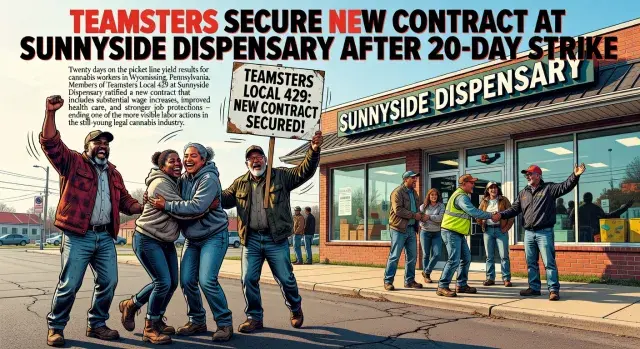
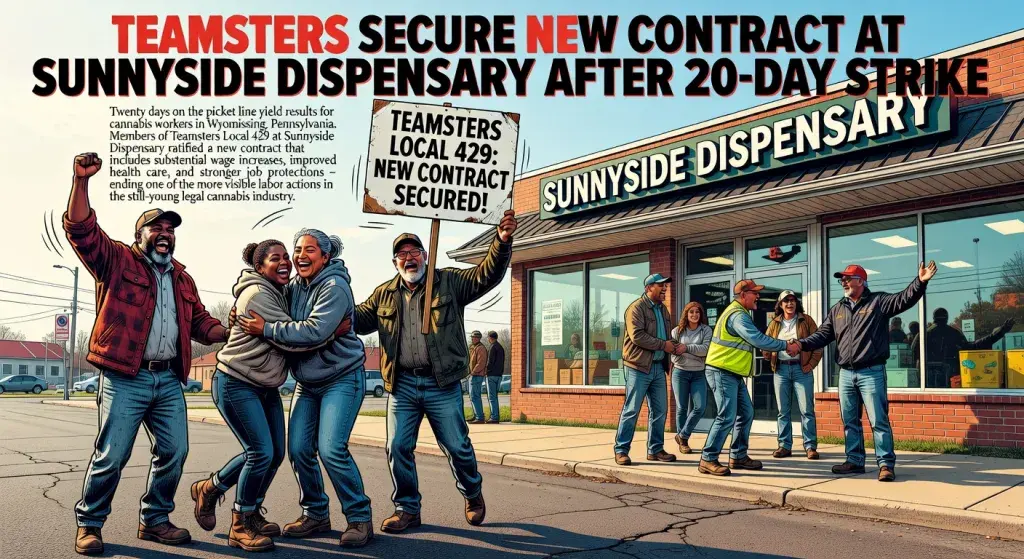
Twenty days on the picket line yielded results for cannabis workers in Wyomissing, Pennsylvania. Members of Teamsters Local 429 at Sunnyside Dispensary ratified a new contract that includes substantial wage increases, improved health care, and stronger job protections - ending one of the more visible labor actions in the still-young legal cannabis industry. Sunnyside operates as a subsidiary of Cresco Labs, a publicly traded multi-state cannabis operator.
What the Contract Includes
The agreement covers a broad range of worker concerns that had driven the strike in the first place. Key provisions include:
- Major wage increases
- Improved health care benefits
- Guaranteed gratuities
- Protection from unjust discipline or termination
- Enhanced job security for part-time employees
- Additional paid time off
"For the first time, I feel like we are respected and our future is secure," said Cobi Motley, a wellness advisor at Sunnyside and Local 429 member. That kind of language - basic dignity, basic security - tells you something about where the floor was before bargaining began.
Organized Labor Finds a Foothold in Cannabis
Here's the broader context that makes this more than a local labor story. The legal cannabis industry has grown rapidly across the United States, but working conditions inside dispensaries and cultivation facilities have not always kept pace with the sector's soaring revenues. Hourly wages in retail cannabis positions have frequently lagged behind comparable service-sector jobs, and benefits - particularly health coverage - have been inconsistent at best. The industry's relative newness means that many workplaces lack the institutional norms that decades of collective bargaining have established in other sectors.
Union organizing in cannabis remains uncommon, which makes each successful contract a reference point for workers elsewhere. Jesse Case, Director of the Teamsters Food Processing Division, framed the outcome in exactly those terms: "These workers are setting a standard for the cannabis industry and demonstrating that collective action produces real results."
That's not just rhetoric. In an industry where multi-state operators like Cresco Labs hold significant market power - publicly traded, operating across numerous state markets - individual employees have limited bargaining leverage on their own. A 20-day strike, sustained through solidarity rather than deep financial reserves, is not a trivial undertaking for hourly workers.
What This Signals for the Industry
Cannabis companies occupy a peculiar position in American commerce. They operate legally under state law while remaining federally prohibited, which creates regulatory complexity around banking, taxation, and - critically - labor law. Workers at cannabis facilities are generally covered by the National Labor Relations Act, but the industry's unusual legal status can muddy enforcement and deter organizing. The fact that Teamsters Local 429 not only organized a dispensary workforce but held a strike and won a contract is significant precisely because these conditions make collective action harder, not easier.
Bill Shappell, President of Local 429, put it plainly: "Our members showed incredible unity and determination during this strike. They made it clear that fair wages, health care, and respect on the job are non-negotiable."
Whether this contract becomes a template for other cannabis workers depends on several factors - the appetite for organizing in other states, the posture of other multi-state operators toward unions, and the broader trajectory of federal cannabis policy. But one thing is clear enough. The Wyomissing workers walked out, stayed out, and came back with a deal that materially improved their working lives. In an industry still figuring out what it owes the people behind the counter, that matters.