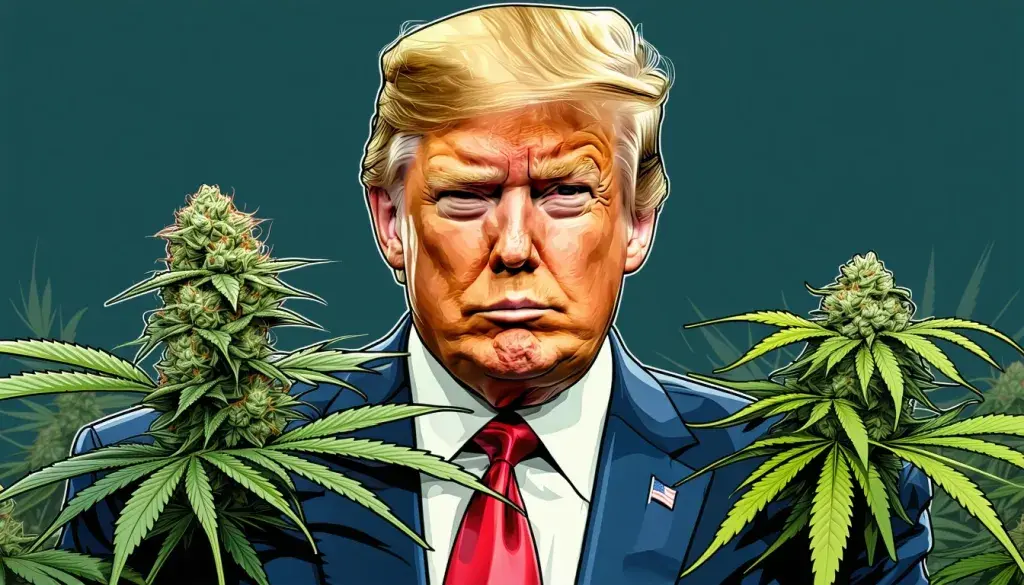
With a single executive order on December 18, President Donald Trump directed the Justice Department to reclassify cannabis from Schedule 1 to Schedule 3 under the Controlled Substances Act - the most consequential shift in federal drug policy in decades. The move defied not just generational precedent but a vocal bloc within his own party, setting up a conflict that could shape the legal cannabis industry's future far more than the order itself.
A Win for the Industry - With Conditions Attached
For the $32 billion legal cannabis sector, rescheduling carries one immediate, concrete prize: relief from IRS Code section 280E. That provision has long barred plant-touching cannabis businesses - cultivators, dispensaries, processors - from deducting ordinary business expenses on their federal returns, a burden that can push effective tax rates well above what any comparable industry pays. Move cannabis to Schedule 3, and 280E no longer applies. That's real money, and the industry has been fighting for this outcome for years.
The thing is, the executive order doesn't flip a switch. There is, as legal analysts have noted, no fixed timeline for when the redesignation formally takes effect. Regulatory processes are involved; opponents have already signaled they will sue. The tax savings are contingent on an outcome that remains legally contested. What the order does, in practice, is set a direction - not deliver a destination.
Banking access, meanwhile, remains entirely out of reach. Rescheduling, even when completed, won't prompt financial institutions to extend services to cannabis businesses. That requires legislation - specifically, something along the lines of the SAFER Banking Act - and legislation requires Congress. Congress, on this subject, has a well-documented record of stalling.
The Republican Fault Line This Order Exposed
Trump signed the order over the explicit objections of some of the most powerful members of his own congressional coalition. House Speaker Mike Johnson of Louisiana opposed it. Senate Majority Whip John Barrasso of Wyoming opposed it. Andy Harris of Maryland - chair of the House Freedom Caucus and the architect of recent language targeting hemp-derived THC products - opposed it. In total, 48 Republican lawmakers signed letters urging the president to stand down.
That's not a fringe dissent. That's the institutional Republican Party pushing back on a Republican president's drug policy in writing.
The resistance reflects something real in the party's base. A November Gallup poll found that only 40 percent of self-identified Republican voters now support cannabis legalization - a sharp drop from majority support recorded just two years earlier, when the Biden administration's rescheduling process was producing findings that cannabis had demonstrated medicinal value. Whatever drove that swing, the GOP electorate is not where it was on this issue, and the party's most conservative lawmakers are reading those numbers carefully.
Senator Cynthia Lummis of Wyoming offers a useful illustration of the bind here. She had previously supported cannabis banking reform - one of a handful of Republicans whose backing made the SAFER Banking Act viable. She also signed the letter opposing rescheduling. That kind of split position, pragmatic on banking and resistant on status, is exactly the combination the industry needs to break open, and it suggests the coalition for comprehensive reform is narrower and more fragile than it looks from a distance.
The Midterm Calculation and What Comes After
The timing of Trump's order has prompted a straightforward political reading: rescheduling as electoral outreach, aimed at independent voters and younger demographics who support cannabis reform in far higher numbers than the Republican base. Gallup's data supports the arithmetic - 85 percent of Democrats and 66 percent of independents favor legalization, compared to that 40 percent Republican figure. Broadening the appeal ahead of midterms, on a policy where most Americans already agree, is not a complicated strategic instinct.
Fair enough, as far as it goes. But the downstream effects of that calculation matter. By moving without Congress - and against the expressed wishes of congressional leadership - Trump has made the legislative follow-through harder, not easier. Johnson, Barrasso, and Harris don't forget. When the industry returns to Capitol Hill seeking banking protections, or when the hemp THC question comes back for a revisit (which the executive order itself opens the door to), those conversations will happen in rooms shaped by this fight.
What's striking, ultimately, is the gap between what this order signals and what it can actually deliver. Cannabis rescheduling has been a federal policy objective for the industry for the better part of a decade. An executive order pointing toward that outcome is not nothing. But without congressional buy-in - on banking, on the hemp market, on the regulatory architecture that actually governs how cannabis businesses operate - the legal industry remains in a structural half-measure. The order moved a number on a scheduling chart. The hard work hasn't started yet.