OpenAI has launched ChatGPT Wallet, a payment tool that lets AI agents inside ChatGPT complete purchases without ever seeing a user's actual card number. The feature debuts first for ChatGPT Pro subscribers in the US through OpenAI's "dots" interface, built in partnership with American Express, Mastercard, and Visa. It's a narrow rollout by design - OpenAI says it wants real-world usage data before expanding further.
How the Tokenized Purchase Flow Works
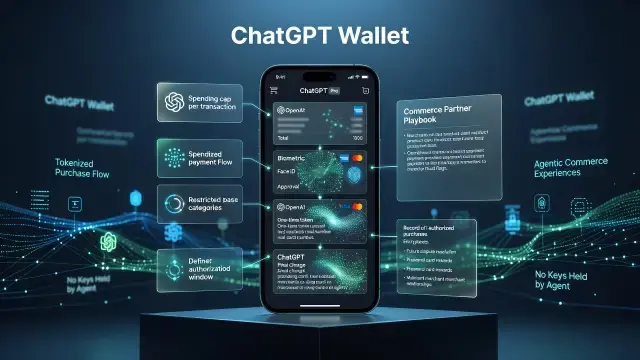
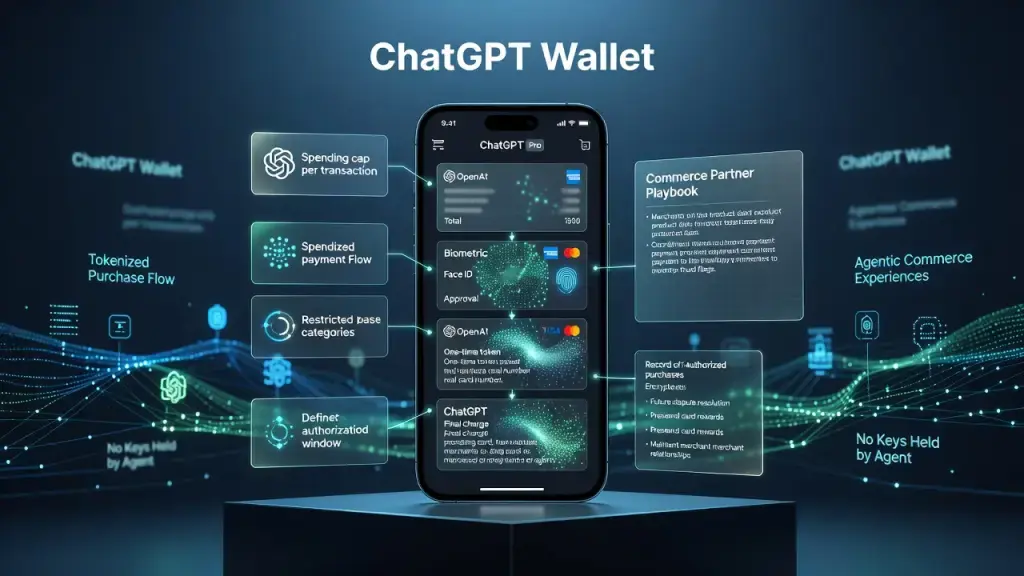
The mechanics are straightforward, even if the implications aren't. A user adds a card once. From there, every purchase runs through the same four-step check: review the items and total, approve with a biometric scan like Face ID or a fingerprint, let the payment network generate a one-time token in place of the real card number, then charge the selected card without the merchant or the agent ever touching the underlying account details.
That token substitution is the part worth sitting with. It's not a new concept - tokenization has been standard in mobile wallets like Apple Pay for years - but applying it to an autonomous agent that can browse, compare, and buy on a user's behalf is a different proposition. The agent acts, but it never actually holds the keys.
Guardrails, Limits, and What Businesses Must Do
Each approval leaves a record of what the user authorized the agent to purchase, which matters if a dispute arises later. Card rewards and purchase protections carry over, since the transaction still runs through the user's existing card relationship rather than some new intermediary account. OpenAI frames this as preserving the merchant relationship too - businesses keep control over pricing, delivery, and customer service, since the sale is still a direct one.
OpenAI is already looking past manual approval. The company plans to let users hand off full purchasing authority to an agent, bounded by preset limits:
- Spending caps per transaction or time period
- Restricted purchase categories
- Defined windows of active authorization
In practice, though, none of this works unless merchants cooperate. Some websites currently block agent traffic without realizing it, which is why OpenAI published a Commerce Partner Playbook alongside the wallet launch. It tells businesses how to expose product data, let ChatGPT agents reach their site, and coordinate with payment and risk providers so legitimate agent purchases aren't flagged as fraud and declined.
Why the Card Networks Signed On
American Express is calling this its first Agentic Commerce Experiences integration - a signal the major networks see agent-driven purchasing as a category worth building infrastructure around, not a novelty to watch from a distance. Mastercard's framing is more pointed: an agent completing a purchase "should strengthen, not bypass, the trust built into payments." That's a tell. The card networks are moving carefully because the fraud and chargeback risk in agent-initiated commerce is still untested at scale, and nobody wants to be the network that got burned first.
OpenAI hasn't said when ChatGPT Wallet reaches Plus or free-tier users, or whether it expands outside the US anytime soon. For now, it's a controlled experiment - one that will shape how merchants, banks, and consumers think about letting software make the final click on a purchase.