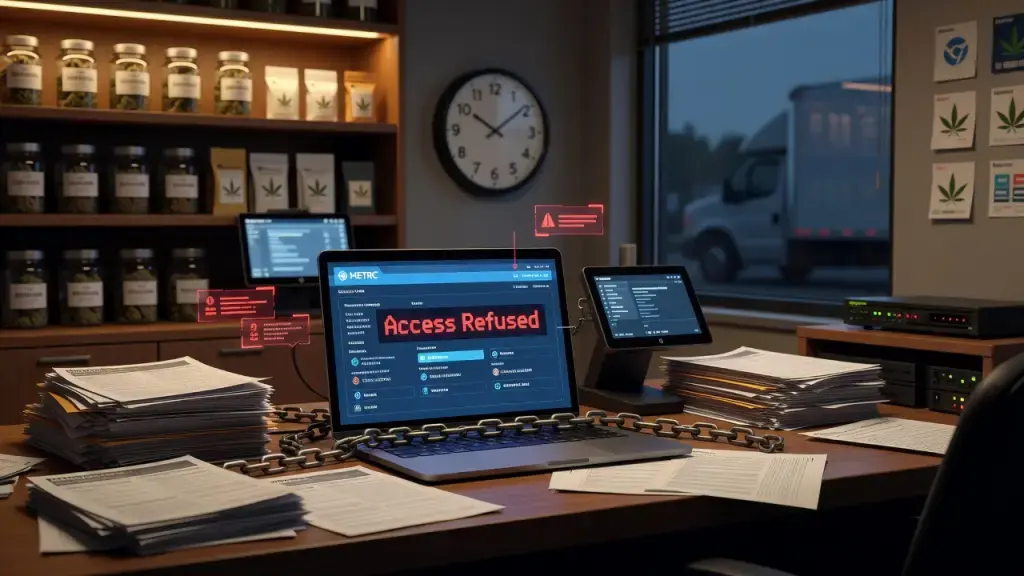
An automated "access refused" message blocking a browser from reaching a site isn't newsworthy on its own. But when the site in question handles cannabis compliance data, regulatory filings, or seed-to-sale tracking, that friction becomes an operational problem with real consequences for dispensary operators and multi-state businesses who depend on uninterrupted access to those systems.
Why Cannabis Operators Can't Afford Downtime
Dispensary compliance runs on a narrow set of digital rails: METRC or a state-equivalent tracking system, point-of-sale platforms tied to inventory counts, and portals for submitting tax filings or renewing licenses. When any one of these gets gated by a browser-verification wall - the kind that flags a request, checks it against bot-detection rules, and either passes it through or refuses it outright - the person on the other end isn't always a bad actor. Sometimes it's a compliance manager trying to reconcile a manifest before a delivery truck leaves the warehouse, or a budtender logging a sale before close.
These verification systems exist for good reason. Cannabis compliance platforms are attractive targets; they hold license numbers, inventory data, and financial records that would be valuable in the wrong hands. Security layers that challenge unfamiliar browsers or flag suspicious traffic patterns are standard practice across regulated industries, not unique to cannabis. The trouble is that the same tools built to keep out scrapers and bad traffic can just as easily lock out legitimate operators who happen to be using an outdated browser, a corporate VPN, or a shared terminal that trips a fraud filter.
The Operational Stakes Behind a Blocked Login
In a cash-heavy, highly regulated retail environment, lost access isn't a minor inconvenience. A store manager who can't log into a POS system to confirm a SKU's compliant packaging status may have to hold a sale. A compliance officer locked out of a state portal during a reporting window risks a late filing, and late filings in cannabis carry consequences that don't exist in most other retail categories - audits, fines, or in repeat cases, license review.
That's the core tension. Regulators built seed-to-sale systems to create accountability and reduce diversion. Fair enough - the intent is sound. But the infrastructure supporting that accountability is often third-party software, subject to the same uptime issues, security misfires, and access errors as any other commercial platform. When a browser gets refused and the only recourse is "sign in or write to us and quote reference," that's a support queue, not a fix. For an operator facing a same-day compliance deadline, a ticket number doesn't pay the tax bill or get the delivery manifest filed on time.
What Operators and Vendors Should Take From This
The lesson here isn't really about one blocked session. It's about dependency. Cannabis retail has built an entire compliance architecture on top of software vendors, state portals, and payment processors that operators don't control and often can't troubleshoot directly.
- Operators should maintain backup documentation - exported inventory logs, saved compliance records - in case a primary system becomes temporarily unreachable.
- Multi-state operators juggling different state tracking systems face compounded risk, since an outage or access block in one jurisdiction doesn't pause obligations in another.
- Software vendors serving the cannabis sector carry a responsibility most mainstream retail platforms don't: downtime here can intersect directly with regulatory deadlines, not just customer experience.
None of this is dramatic. It's the quiet infrastructure risk sitting underneath a heavily regulated, still-maturing retail sector - one where a browser error message can, in the wrong moment, turn into a compliance problem.