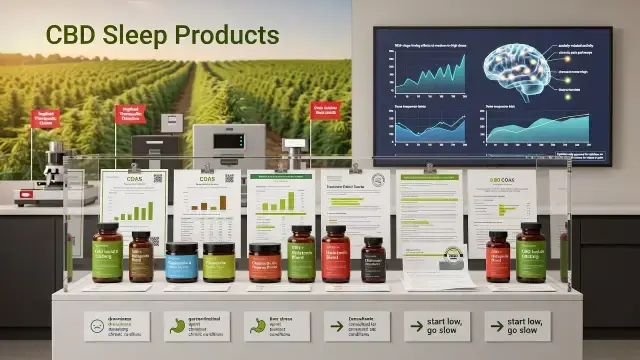
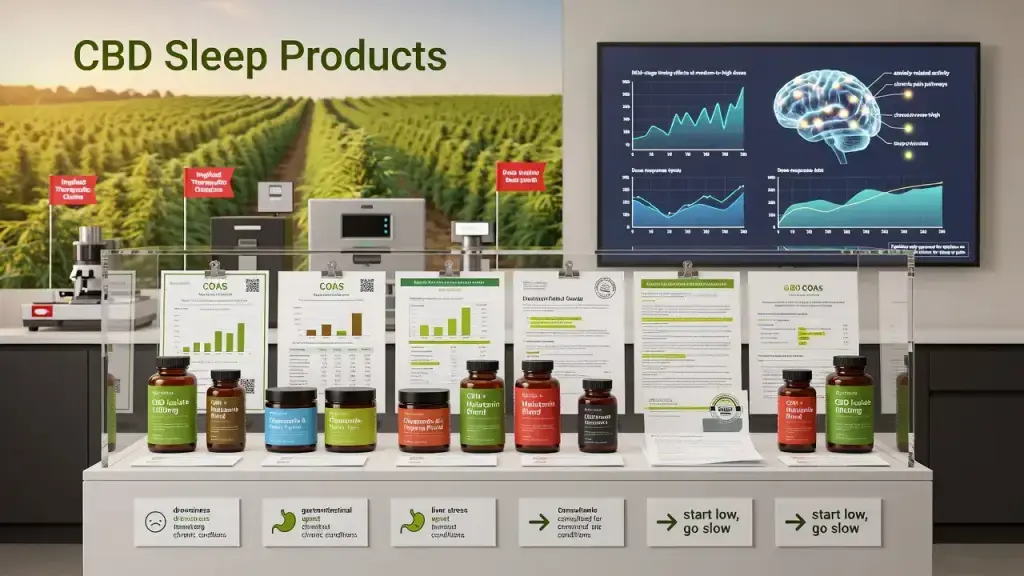
Sleep-focused CBD products occupy a crowded shelf, and the gap between a credible item and a questionable one often comes down to paperwork most shoppers never see: certificates of analysis, batch testing, and label accuracy. For retailers stocking these products and for publishers reviewing them, that documentation is the actual story - not the marketing copy on the box.
Why Lab Testing Is the Real Differentiator
CBD is not FDA-approved as a sleep aid, and the market has no uniform federal standard governing potency claims or purity thresholds. That absence of oversight means third-party lab testing functions as the de facto quality control system. A certificate of analysis confirms cannabinoid content matches the label and screens for pesticides, heavy metals and residual solvents. Products that fail those screens, or that misstate CBD concentration, represent a genuine consumer-safety risk - and a liability risk for any retailer selling them. Reputable manufacturers post COAs directly on packaging via QR code or make them available on request. If a brand can't produce one, that's a disqualifying red flag, not a minor omission.
For dispensary buyers and wellness retailers building a CBD sleep category, this has direct purchasing implications. Vetting a supplier means checking whether COAs are current, whether they're issued by an independent lab rather than an in-house facility, and whether the hemp source is domestic, since U.S.-grown hemp falls under agricultural oversight that offers at least some traceability back to the farm.
What the Science Actually Supports - and What It Doesn't
The research on CBD and sleep is suggestive, not settled. Some studies point to CBD affecting REM-stage timing at medium-to-high doses, and separate research on raw cannabis flower found that higher CBD-to-THC ratios correlated with better insomnia symptom outcomes in some participants. But the same research also found that low doses of CBD alongside cannabis use could worsen insomnia symptoms in people who started with minimal sleep disturbance. That's a nuance worth sitting with: more isn't automatically better, and the dose-response relationship isn't linear.
Anxiety and chronic pain are frequently cited drivers of poor sleep, and CBD has been studied for both, with early findings on anxiety-related brain receptor activity showing promise but nowhere near the evidentiary bar required for a therapeutic claim. No CBD-based pain medication is currently approved in the U.S. Epidiolex remains the only FDA-approved CBD product, and it treats specific epilepsy conditions - not sleep, not generalized pain. Any retailer or reviewer implying otherwise is overstating what the evidence shows.
Formulation Trends Operators Should Track
Beyond CBD isolate, many sleep-marketed products now layer in CBN, CBG, melatonin, chamomile, valerian root or specific terpene blends. CBN in particular has drawn attention for sleep-adjacent effects, though evidence there is also still developing rather than conclusive. For buyers building assortment, this matters commercially: multi-cannabinoid formulations often carry different potency math and different per-serving costs, and clear labeling on CBD-versus-CBN-versus-CBG content is where inaccurate claims most often surface in testing.
- Verify COAs are recent, lab-specific and cover pesticides, heavy metals and solvents
- Confirm domestic hemp sourcing where claimed
- Check potency labeling against batch-level lab results, not just front-of-package claims
- Flag products making implied therapeutic claims not backed by FDA approval
Consumer Safety and the Limits of Self-Dosing
CBD carries documented side effects, including drowsiness, gastrointestinal upset, mood changes and potential liver stress at higher doses, plus possible interactions with prescription medications. The "start low, go slow" guidance common in the category exists precisely because dosing isn't standardized across brands. For retailers, that argues for clear point-of-sale guidance and labeling that doesn't oversell outcomes. For consumers with chronic insomnia, anxiety disorders or ongoing pain conditions, a conversation with a health care provider before use remains the responsible starting point - not a product review.