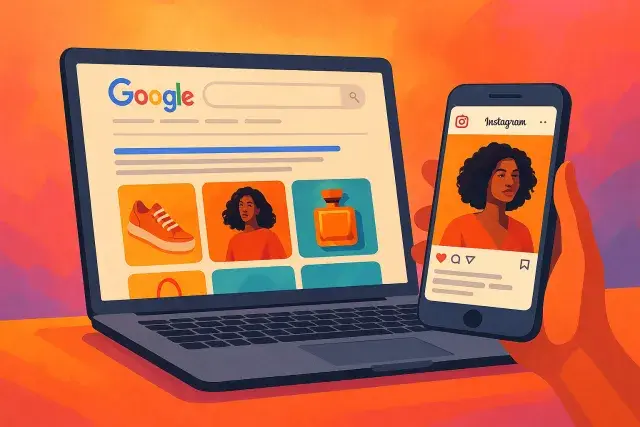
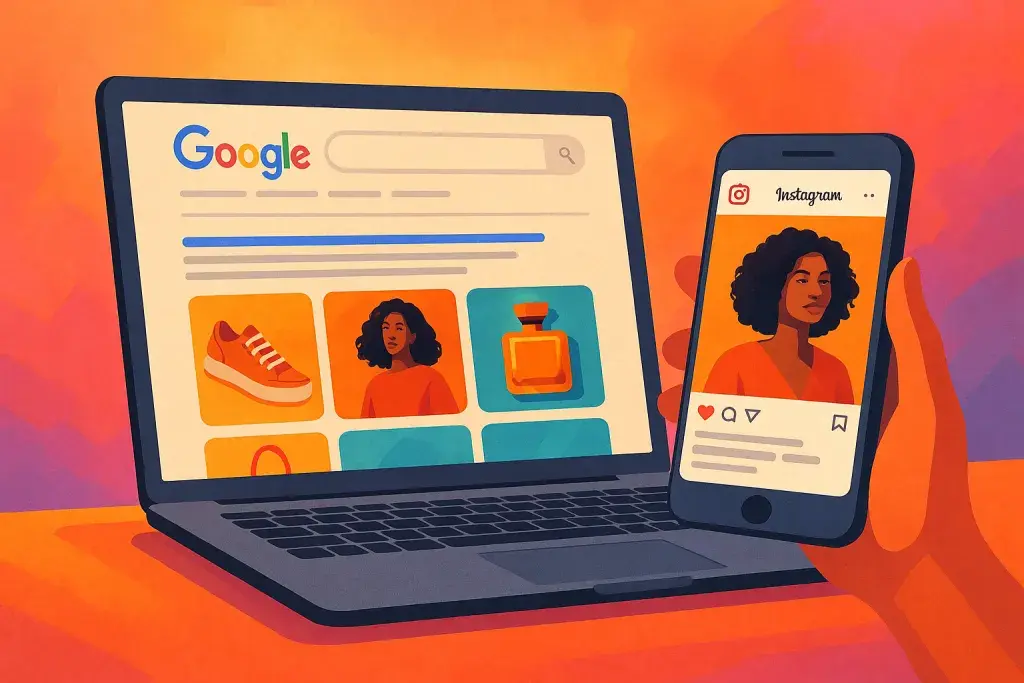
Type a brand name followed by a product category, and there is a real chance you will see a grid of Instagram photos sitting above the traditional blue links. This is not a glitch or a temporary experiment. It reflects a deliberate shift in how visual content from social platforms gets surfaced to people who never opened the app that day. For marketers, small business owners, and anyone building a personal brand, this shift changes the calculus of what a single post can do.
The mechanics behind this are less mysterious than they appear once you break them down. Public Instagram content - posts, profile information, sometimes Reels - gets indexed and displayed in response to relevant queries, provided the account is public and meets certain visibility conditions. That last part matters more than people assume. An account that is inactive, poorly optimized, or newly created without an established posting history will rarely show up, regardless of how good the content is. This is one reason some businesses choose to comprar conta instagram with an existing history and follower base rather than starting from zero, since a fresh account with no track record has to earn visibility the slow way.
What follows is a full breakdown of how this feature works, why it exists, what changed heading into 2026, and what a business or creator should actually do about it.
What "Instagram Posts in Google Search" Actually Means
The Basic Mechanism
At its core, this feature means that public Instagram content can appear as a distinct result type when someone searches for a related term - a brand name, a person, a product, a location. Instead of only linking to the Instagram profile itself, individual posts or a curated carousel of images may show up directly in results, complete with captions, engagement signals, and a direct link back to the post.
This is different from simply linking to a profile page. A profile link sends someone to a static destination. A post-level result surfaces specific content - a photo of a product, a testimonial, a before-and-after shot - matched to intent. That distinction is the reason instagram posts in google search explained discussions tend to focus so heavily on content specificity rather than account authority alone.
Why This Exists at All
Visual search behavior has grown steadily. People increasingly want to see something before they read about it - a restaurant's interior, a product's texture, a stylist's portfolio. Indexing public social content directly answers that behavior without forcing users to leave familiar results pages and open a separate app. It also reflects the reality that enormous volumes of commercially and culturally relevant content live exclusively on social platforms rather than on traditional websites.
- Public posts with clear, descriptive captions
- Business profiles with complete bios and category tags
- Accounts with consistent posting activity over time
- Content that includes location tags or product-relevant keywords
How the Indexing Process Works
Public vs. Private Accounts
Only public accounts are eligible. Private profiles, regardless of follower count or content quality, remain invisible to this system entirely. This is a hard boundary, not a ranking factor - private content simply never enters the pool of indexable material.
Crawling and Refresh Cycles
Indexed content is not updated instantly. There is a refresh cycle, meaning a new post might take time before it becomes eligible to surface, and older posts can remain visible long after they've lost relevance. This creates a practical lag between publishing something and seeing it reflected in results, which matters for time-sensitive campaigns.
Signals That Influence Visibility
Captions carry real weight. Accounts that write descriptive, keyword-relevant captions rather than emoji strings or vague phrases tend to surface more reliably. Alt text, when added manually, also contributes. Engagement - likes, comments, shares - appears to correlate with visibility, though it is not a guarantee on its own.
Instagram Posts in Google Search 2026: What Changed
Expanded Content Types
Heading into 2026, the range of indexable content broadened beyond static photo posts to include short-form video content more consistently. This means Reels with strong captions and clear visual subject matter now compete for the same visibility that was once reserved almost exclusively for image posts.
Tighter Integration With Local Results
Local business searches increasingly pull in Instagram content alongside map listings and reviews. A café searched by name might return a mix of map data, review snippets, and a handful of recent public posts showing the physical space or menu items - a blend that didn't exist in earlier iterations of this feature.
Greater Emphasis on Recency
Older, stale content is being deprioritized in favor of posts from the last several months. This is a meaningful shift for any business that built a following years ago but stopped posting regularly - historical popularity no longer guarantees ongoing visibility.
Recent Instagram Posts in Google Search News
Platform-Level Adjustments
There has been continued back-and-forth between how much control Instagram allows over indexing settings and how aggressively content gets pulled into results. Some accounts have reported changes in how much of their content appears, tied to shifts in account settings around discoverability that users may not realize they've toggled.
Business Reactions and Adaptation
Brands managing multiple accounts have started auditing captions specifically for this purpose, treating them less like casual commentary and more like structured descriptions. Community managers now routinely check whether their public posts appear in relevant searches as a standard part of monthly reporting.
Instagram Posts in Google Search Update: What's New for Users and Creators
New Visibility Toggles
Recent settings changes give account holders clearer control over whether their content is eligible for this kind of external indexing at all. This matters for creators who want visibility only within the app itself, or conversely, for those actively trying to maximize outside discovery.
Impact on Small Businesses
For small businesses without dedicated marketing staff, this update effectively turns an active Instagram account into a secondary storefront that gets discovered passively. A bakery that posts consistent, well-captioned photos of its daily offerings can now be found by someone who never followed the account and never searched Instagram directly.
What This Means for Content Strategy
Posting cadence, caption quality, and image clarity now carry consequences beyond the app's internal algorithm. Content decisions increasingly need to account for a second audience: people who will encounter the post outside Instagram entirely, with no prior context.
Practical Steps to Improve Visibility
Optimizing Captions and Profile Details
Write captions that describe what's actually in the image or video, not just clever wordplay. Complete every field in the business profile - category, location, contact details - since incomplete profiles are less likely to surface with useful context.
Posting Consistency and Timing
Irregular posting creates gaps that hurt long-term visibility. A steady cadence, even a modest one, performs better than sporadic bursts of high-frequency posting followed by silence.
Building Account Credibility Early
New accounts face a visibility disadvantage simply due to lack of history. Established engagement patterns, consistent branding, and a track record of public activity all contribute to how readily an account's content gets surfaced.
Frequently Asked Questions
Do private Instagram accounts ever show up in these results?
No. Private accounts are excluded entirely from this indexing process, regardless of engagement or content quality. Switching to public is a prerequisite, not an optional optimization.
How quickly does a new post appear after publishing?
There is no fixed timeline, but it is rarely instant. Refresh cycles vary, and a post may take anywhere from a few days to several weeks to become eligible for visibility, depending on account activity and content signals.
Does deleting a post remove it from search results immediately?
Deletion typically triggers removal, but there can be a delay before cached versions disappear entirely. Screenshots or reposts by others, however, remain outside anyone's control once shared.
Can hashtags improve a post's chances of appearing?
Hashtags contribute less than clear, descriptive captions and complete profile information. They're not irrelevant, but treating them as the primary lever misunderstands how the indexing prioritizes contextual text.
Is this feature the same across every country?
No. Availability and behavior vary by region, partly due to differing platform agreements and partly due to local content regulations. A feature fully active in one market may be limited or absent in another.
Should businesses worry about older posts resurfacing unexpectedly?
It's possible, particularly for posts with strong historical engagement, though the 2026 emphasis on recency has reduced how often very old content dominates results. Regularly auditing what's publicly visible remains a reasonable precaution.